

Thousands On Apoquel And Cytopoint — And She's Still Scratching. Here's What None Of It Was Designed To Fix.
What's actually happening inside your dog's skin — and why every medication you've tried was built to suppress it, not repair it.
 ★★★★★3,791
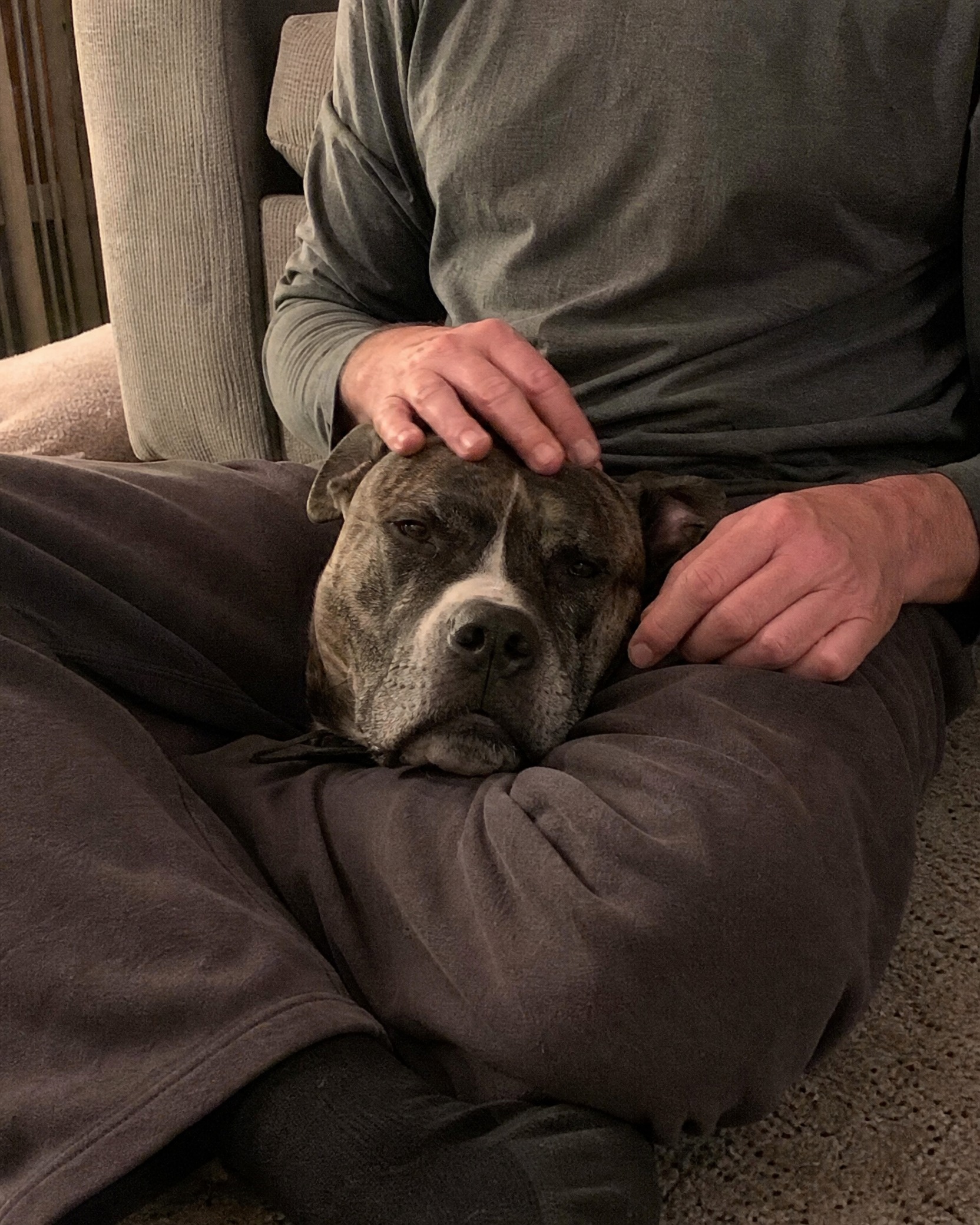
If your dog suffers from chronic hot spots, ear infections, constant scratching, or obsessive paw licking — and you've already spent thousands on Apoquel, Cytopoint, special foods and endless vet visits with no lasting relief — you need to read every word of this investigation.
Because what we uncovered explains why everything you've tried has failed.
And more importantly — what actually works.
Why Medications Keep Failing
Here's what's really happening inside your dog's skin.
The skin barrier — a microscopic layer of cells whose entire job is keeping allergens out — is broken.
Shattered, actually.
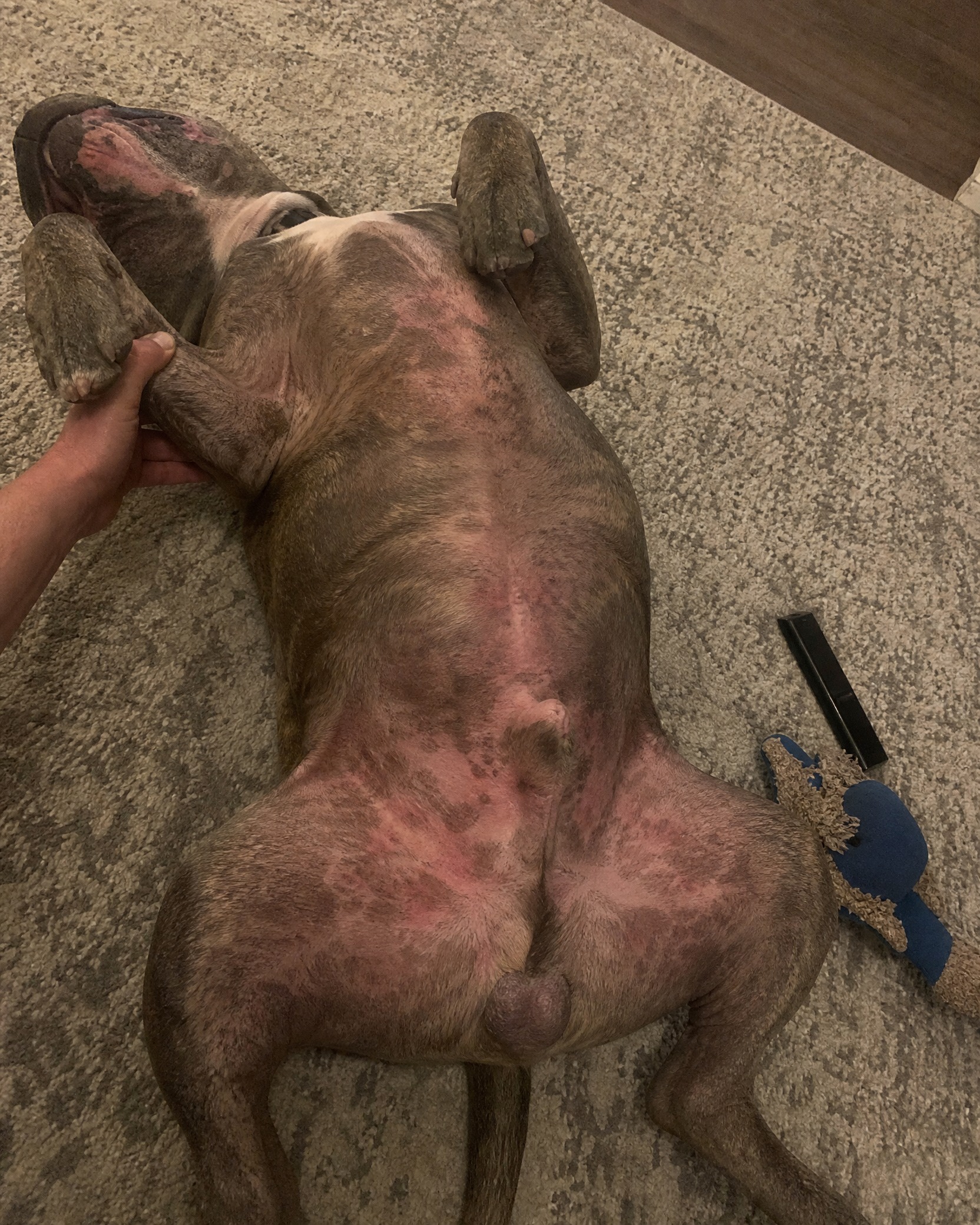
So allergens — pollen, dust, grass proteins, everything — penetrate deep into your dog's tissue. The immune system goes into overdrive. Inflammation explodes. Your dog scratches. The barrier breaks down more. More allergens get in. More inflammation. More scratching.
It's a vicious cycle that gets worse every month.
Now here's what Apoquel and Cytopoint actually do:
They suppress the immune response.
They turn down the alarm while the house burns.

The barrier stays broken. Allergens keep penetrating. But your dog's immune system is muzzled, so they suffer less — for three to six weeks.
Then the medication wears off. The alarm comes back on. And you're paying $300–400 for another injection.
Forever.
Your vet isn't lying to you. This is what they were taught. Manage symptoms. Suppress the immune response. Repeat monthly.
The part nobody mentionsDogs lose collagen from around the age of two — roughly 7–10% every year after that. If your dog is around five, she has already lost something like a third of the barrier she was born with. Five is the single most common age we hear from.
But a small group of Norwegian researchers asked a different question:
“What if we stopped suppressing the response and actually fixed what's broken?”
The Norwegian Fishing Village Discovery
For over 400 years, Norwegian fishing villages have used working dogs in brutal Arctic conditions — dogs that would otherwise suffer constant skin breakdown from harsh weather, cold water and environmental stress.
These weren't pets. These were working animals whose survival depended on maintaining a healthy skin barrier.
And they discovered something remarkable:
Collagen — fed daily, in liquid form — could rebuild the skin barrier from the inside.
Not suppress symptoms. Not manage inflammation. Actually rebuild the broken cellular structure.
Modern Norwegian marine biologists took that practice and ran tests on around 340 dogs with chronic allergies — dogs that had failed Apoquel, Cytopoint, everything.
Which Collagen — And Why Most Of It Does Nothing
This is the part that matters most, and it's the part almost every owner gets wrong — usually because they tried collagen once, saw no change, and wrote the whole idea off.
They were right that it did nothing. They just didn't know why.
1. The wrong type
Collagen isn't one substance. Type I is the structural collagen of skin — the brick and mortar of the barrier itself. Type III is the repair type, what the body lays down first when tissue is damaged. Skin needs both.
Type II is cartilage. It belongs in joints, and it is what most pet collagen on the shelf actually contains, because most of it is formulated for hips and mobility. Feeding joint collagen for a skin barrier isn't a weaker version of the right thing. It's the wrong thing.
2. The wrong delivery
Pills, powders and chews contain large intact molecules, and chews are heat-processed during manufacture — which damages the protein before your dog ever swallows it. Less than 8% reaches the bloodstream.
Hydrolysed liquid collagen is pre-broken into short peptides small enough to absorb through the gut wall largely intact — reaching skin cells at a 90%+ absorption rate.
What's actually in the bottleTypes I and III collagen, hydrolysed, from deep sea cod — the two types the skin barrier is built from — with hyaluronic acid to seal the barrier and hold water in it, and glucosamine for the joints underneath. Marine sourced. Not chicken, beef or pork.
“Honestly, I Thought It Was A Facebook Scam”
That is close to word-for-word the most common thing owners tell us after they order. Not the price — the trust.
And frankly it's a reasonable position. If you have already spent thousands on things that did not work, the correct response to the next confident promise is suspicion.
So don't take our word for any of it. Take the terms instead.
🛡 90 days. Every penny back.
Use it — actually use it. Give it daily and judge it on your own dog rather than on anything written here. If nothing changes, you get a full refund, and you can return even an empty bottle.
Ninety days is not a marketing number. Collagen is a structural protein, not a drug — it's rebuilding a barrier, and that takes about twelve weeks. A product that did nothing could not afford to offer a window that long, because almost everyone would take it.
What To Expect, Week By Week
Real Owners, Real Results
“I'm 63. I've been dealing with Sadie's skin since I retired. Six years of chronic hot spots. $6,400 on Cytopoint over 18 months. They'd disappear for three weeks then come back worse.
I found this liquid collagen and thought ‘here we go again.’ But the guarantee was real, so I tried it.
By day 47 the hot spots were gone. Not suppressed. Actually healed. Her coat grew back thick and soft.
It's been six months and they haven't come back. My vet went over her at the last check and told me to keep doing whatever I'm doing.”
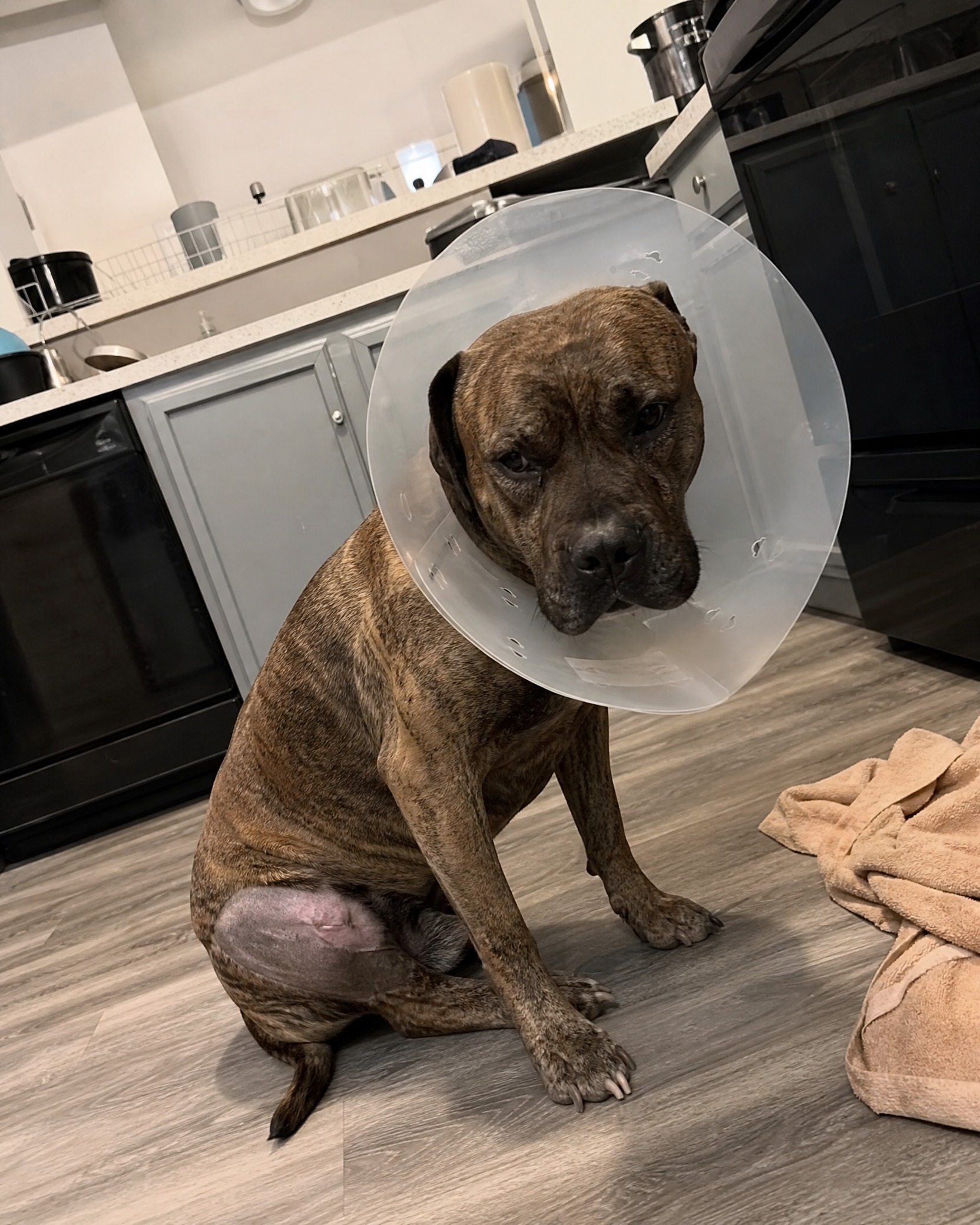
“Seven years of ear infections. 23 vet visits in three years. Every antibiotic, every flush, every medication. They'd clear up for a few weeks then come back worse.
The liquid form made it easy — just squirt it on his food once a day. 47 days in, the infections stopped. Not ‘got better.’ Stopped.
It's been eight months. Zero infections. My vet literally said ‘I don't understand what you're doing, but don't stop.’”
“My husband and I are on a fixed income. $200 every two weeks for Cytopoint was breaking us. Hot spots every two or three weeks for four years, like clockwork. Apoquel helped but she gained weight and seemed zombified.
This just mixes into her food. She doesn't even know it's there.
90 days later: zero hot spots. The frantic 3am scratching stopped. I can pet her without finding open wounds.
But here's what really got me — she's herself again. Playful. Alert. I didn't realise how much the suffering had changed her until I got the real her back.”
Why You Haven't Heard About This
1) It isn't patentable. Pharmaceutical companies can't patent collagen. No billion-dollar profits, no marketing budget.
2) Most vets aren't trained in nutritional dermatology. Veterinary school focuses almost entirely on pharmaceutical intervention — Apoquel, Cytopoint, steroids. It isn't that your vet is hiding this from you. They simply weren't taught it.
3) It only recently reached the US. Norwegian researchers partnered with one American company to manufacture the liquid formula properly. Most vets haven't come across it yet.
What This Costs — And What It Saves
Before you look at our number, go and work out yours. Open your bank app and add up the last twelve months of Apoquel, Cytopoint, consults and prescription food. Most people are genuinely surprised.
| What you're likely spending now | Per year |
|---|---|
| Apoquel — $2.50–4.00 a day, ongoing | ~$1,200 |
| Cytopoint — $300–450 every 4–8 weeks | ~$2,700 |
| Vet consults — $150–300 each | ~$900 |
| Prescription food — $100–200 a month | ~$1,800 |
| Typical annual total | $3,000–6,000 |
| Bloom Triple Collagen — one teaspoon daily | about $307 |
Free shipping · 90-day money-back guarantee
Questions Owners Ask Before They Order
Is it safe alongside what my vet has prescribed?
Yes. It's a food-based supplement — no drugs, no hormones, nothing immune-suppressing — so there's no pharmacological interaction. Many owners start it while still medicating and taper later with their own vet's guidance. Never stop a prescribed medication without speaking to your vet first.
I already tried collagen and it did nothing.
Then check what you bought. Turn the tub over and look for the type. If it says Type II, or doesn't specify at all, it's almost certainly cartilage collagen formulated for joints — the wrong molecule for skin. And if it was a chew or a powder, most of it never survived digestion. Those two things account for nearly every “collagen did nothing” story we hear.
How long before I'd know?
Plan for the full twelve weeks before you start. Most of the visible change happens between weeks three and eight, and the single most common way owners waste their money is stopping at week four because it's “only a bit better.” A bit better at week four is exactly what week four is supposed to look like.
My dog is twelve. Is it too late?
No — and older dogs are a large part of who this is used with. Collagen production has fallen furthest in a senior, which means the barrier has the most ground to make up, so it often takes the full twelve weeks rather than eight. Owners of older dogs tend to report comfort and sleep changing before the coat does.
I have three dogs. Can they all take it?
Yes — it's dosed by weight, so a household mixes doses from the same bottle. Work out the combined daily amount before you order, because multi-dog homes get through it roughly twice as fast as owners expect.
What if it does nothing for my dog?
Then you send it back and you pay nothing — even an empty bottle. That's the entire arrangement, and it's why the window is 90 days rather than the fourteen most supplements offer. Fourteen days isn't long enough to judge a structural protein, and a company offering fourteen days knows that.

Important. Bloom Triple Collagen is a food supplement, not a medicine. It is not intended to diagnose, treat, cure or prevent any disease, and it is not a substitute for veterinary care. Results vary between dogs.
Never stop, reduce or change a medication your vet has prescribed without speaking to them first. If your dog's skin is severe, painful, bleeding or worsening, or if she has an active infection, see your vet.
Testimonials reflect the experience of individual owners and are not typical of every dog. Timelines described are what owners commonly report and are not a guarantee of any particular outcome.